About
Paul Fremes
I found a pattern running through Monet, Kurosawa, and Cartier-Bresson. It took 26 years to see it clearly.
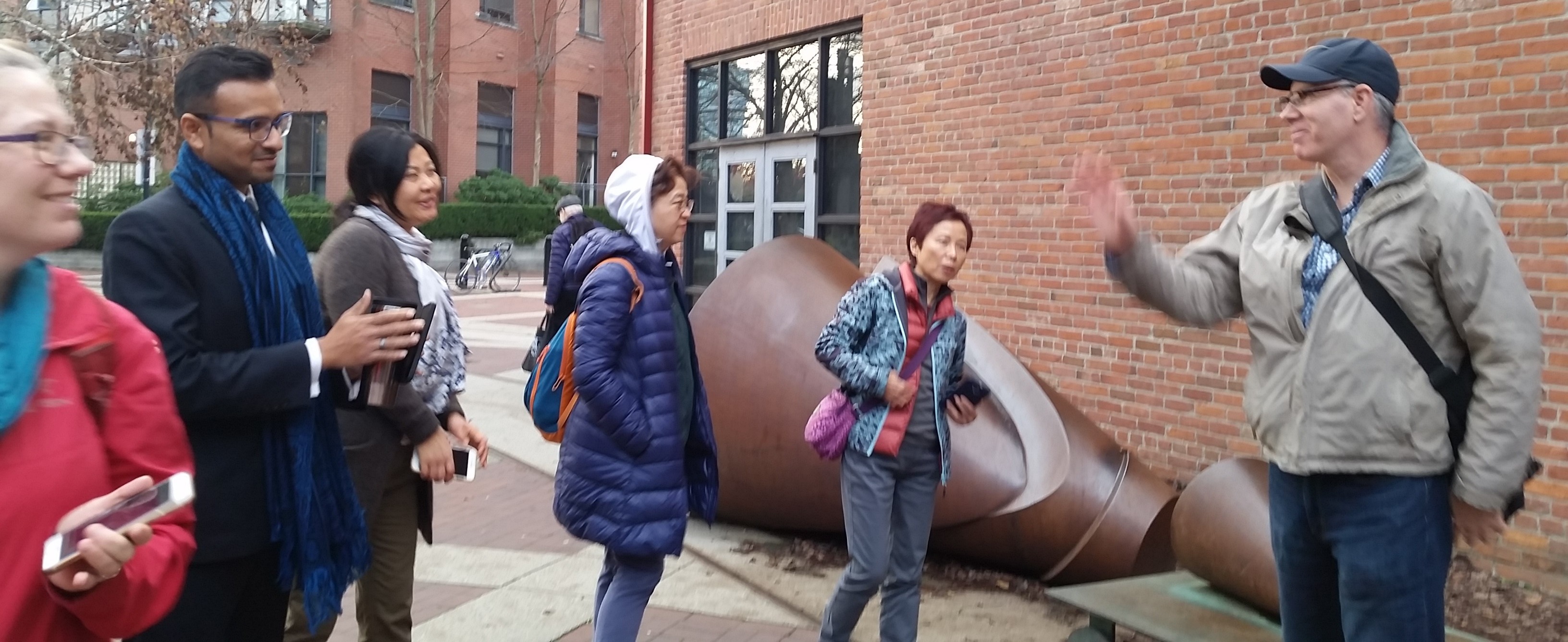
Photograph by Joey Fremes
About
I found a pattern running through Monet, Kurosawa, and Cartier-Bresson. It took 26 years to see it clearly.
Photograph by Joey Fremes
For more than 26 years, I have taught image composition and visual perception. I've led advanced composition workshops for members of the American Society of Cinematographers, taught photography at institutions including Simon Fraser University, the Evanston Art Center, the Jackson Junge Art Gallery in Chicago, and the Sebastopol Art Center, and worked with industry leaders such as Adobe and Yelp to strengthen visual communication strategies.
My writing on visual structure has appeared in British Cinematographer, and a manuscript presenting this research has been submitted to Leonardo, the MIT Press journal of art, science, and technology.
But credentials alone do not explain this work.
The real breakthrough came in 2016: I identified a specific, repeatable structural relationship — a small, dark element balancing a much larger, bright one — operating across the work of Monet, Kurosawa, Cartier-Bresson, and hundreds of other artists across centuries and disciplines. The perceptual mechanism behind it — the brightness–weight illusion — had been documented in scientific literature since 2010, but had never been connected to the history of visual art composition. That connection is the framework.
Once seen clearly, it transformed how I created — and deepened my understanding of why certain images feel balanced, intentional, and emotionally precise. What surprised me most was not its presence across centuries of great work, but how rarely it had been articulated in a direct, experiential way.
This workshop was built to change that.
The framework is taught in individual online workshops, in institutional settings ranging from film schools to university arts programs, and as a live virtual experience for corporate teams.
If any of this resonates — if you've felt what I'm describing in images you've loved without being able to say why — the workshop is where that changes.